

Frequently Asked Questions (FAQ)
ACE BIO – Understanding Water Filtration
What is the real purpose of filtering tap water today?
Filtering tap water is no longer merely a matter of convenience—it reflects a broader concern for health, environmental sustainability, and autonomy. While tap water in many regions is legally potable, it may still contain residual chlorine, trace pesticides, heavy metals, or pharmaceutical residues in very small quantities.
Over time, repeated exposure to these substances raises legitimate questions about long-term health effects, even when concentrations remain within regulatory limits. Filtration therefore acts as an additional layer of precaution, allowing individuals to regain control over the quality of the water they consume daily.
Beyond health, filtration also responds to an ecological imperative. By reducing dependence on bottled water, it directly contributes to lowering plastic waste, transportation emissions, and resource consumption. In this sense, filtering water becomes both a personal health decision and an environmental commitment.
How does a multi-stage natural filtration system actually work?
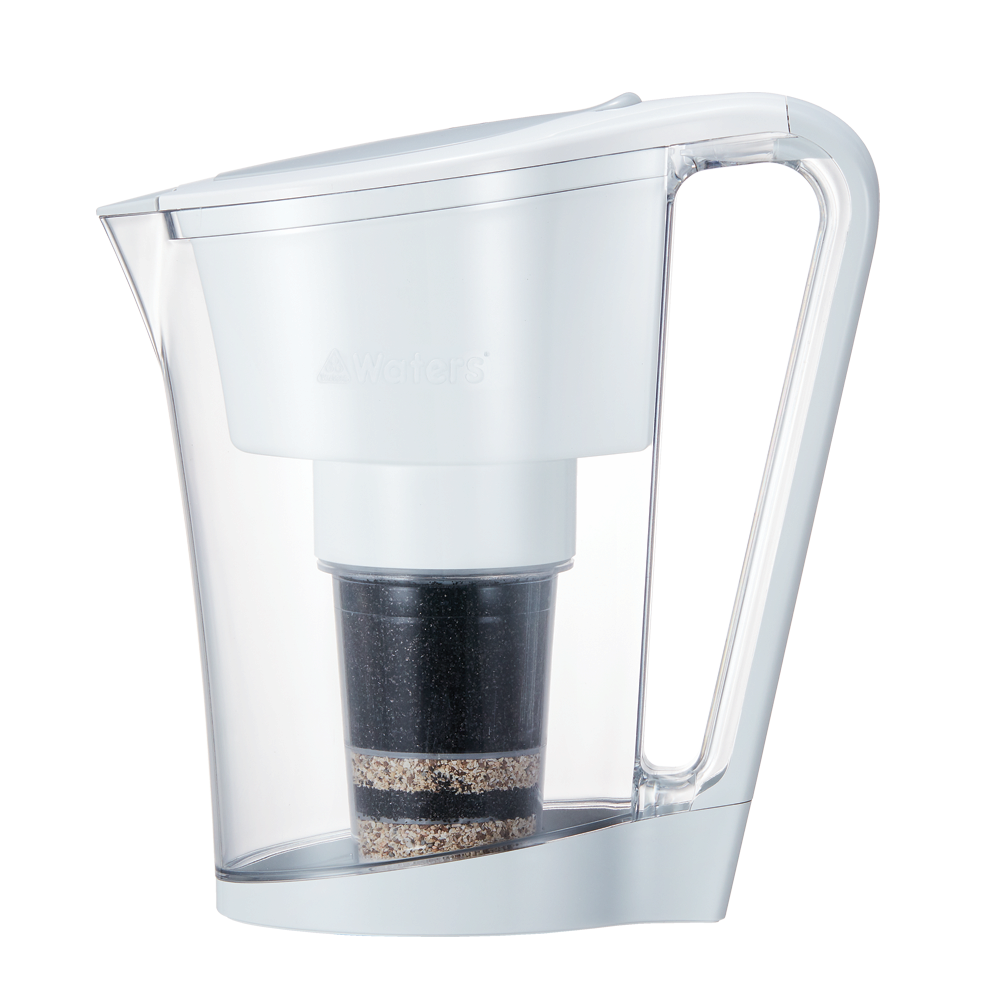
A multi-stage filtration system operates through the complementarity of different materials, each targeting specific categories of contaminants.
- Activated carbon absorbs organic compounds, chlorine, and unwanted odors through a process of adsorption.
- Ceramic filtration acts as a physical barrier, retaining fine particles and certain microorganisms.
- Minerals may help rebalance the water and stabilize its taste.
Rather than aggressively stripping water of all its components, this approach aims to refine and purify, preserving what is beneficial while removing what is undesirable. The objective is not to create chemically “empty” water, but to restore a balanced, clean, and pleasant drinking experience.
Why is the choice of materials crucial in a filtration system?
The materials used in a filtration device are not neutral—they directly influence both water quality and user safety.
Plastic, even when certified, can under certain conditions release microparticles or chemical compounds. Over time, this raises concerns regarding chronic exposure. By contrast, materials such as borosilicate glass and stainless steel are chemically stable, non-porous, and resistant to temperature variations.
Choosing such materials reflects a commitment to purity, durability, and long-term safety. It also aligns with a broader philosophy: reducing hidden risks while ensuring that the water remains as unaltered and natural as possible.
Does filtering water remove essential minerals?
This is a common concern, often based on the misconception that filtration “empties” water of its nutritional value. In reality, most multi-stage filtration systems only partially reduce certain minerals, such as calcium or magnesium, depending on the filter composition.
However, drinking water is not the primary source of mineral intake in a balanced diet. The essential nutrients required by the human body are predominantly obtained through food consumption.
Filtered water therefore remains nutritionally relevant, while offering improved purity and taste. The goal is not to demineralize water completely, but to optimize its quality without compromising its natural properties.
Can a filter jug guarantee completely safe water?
A filter jug is designed to improve the quality of potable tap water, not to transform unsafe water into drinking water. It is highly effective at reducing many common contaminants, but it is not intended to eliminate all pathogens, viruses, or extreme pollutants found in untreated sources.
Its role should therefore be understood as a refinement tool, not a substitute for water treatment infrastructure. When used appropriately, it significantly enhances taste, clarity, and safety margins, but it must always be paired with already safe water sources.
What are the long-term health benefits of drinking filtered water?
The benefits of filtered water are often subtle but meaningful over time. By reducing exposure to low-dose contaminants, individuals may support better hydration, digestion, and overall physiological balance.
Equally important is the behavioral impact: when water tastes better, people tend to drink more of it. This improved hydration can positively influence cognitive function, energy levels, and metabolic processes.
Thus, the value of filtration lies not only in what it removes, but also in how it encourages healthier daily habits.
Why is reducing plastic consumption linked to water filtration?
Bottled water represents one of the most visible symbols of mass consumption and environmental strain. Its lifecycle—from production to disposal—generates significant carbon emissions and plastic pollution, much of which ends up in oceans or landfills.
Using a filtration system at home offers a practical alternative that drastically reduces reliance on single-use plastics. It transforms water consumption into a low-impact, sustainable practice, without sacrificing comfort or accessibility.
This shift reflects a broader transition toward responsible consumption, where everyday choices align with long-term environmental goals.
How often should a filter be replaced, and why does it matter?
A filter has a finite absorption capacity. Over time, its ability to trap contaminants decreases, and in some cases, it may even become a favorable environment for bacterial growth if not replaced.
Regular replacement is therefore essential to maintain both efficiency and hygiene. It ensures that the filtration process remains reliable and that the water continues to meet the expected standards of purity and safety.
Neglecting this aspect can compromise the very purpose of filtration, making maintenance a key component of responsible use.
Is choosing filtered water only a practical decision?
Not entirely. While practical considerations—health, cost, convenience—play an important role, the choice also carries a symbolic and philosophical dimension.
It reflects a desire to regain control over what we consume, to prioritize quality over excess, and to engage in a more conscious relationship with natural resources.
In this sense, drinking filtered water becomes more than a habit: it becomes an intentional act, situated at the intersection of personal well-being and collective responsibility.

Why Filter Your Water?
Filtering tap water today goes beyond convenience; it reflects growing concerns about health, sustainability, and personal control over consumption. Although tap water meets safety standards, it may still contain residual chlorine, trace pollutants, or heavy metals. Filtration provides an additional layer of protection, improving both purity and taste while supporting a more conscious approach to daily hydration.
An effective system relies on the complementarity of activated carbon, ceramic filtration, and natural minerals. Together, they remove unwanted substances while preserving the water’s essential balance, resulting in a cleaner, smoother, and more enjoyable experience. The goal is not to strip water entirely, but to refine it with precision.
Material choice plays a crucial role. Using borosilicate glass and stainless steel avoids the risks associated with plastic contact, ensuring greater neutrality, durability, and safety. At the same time, reducing dependence on single-use plastic bottles significantly lowers environmental impact and supports more responsible consumption habits.
Filtration may slightly reduce certain minerals, yet water remains nutritionally relevant, as essential nutrients primarily come from food. Improved taste often encourages better hydration, contributing to overall well-being, energy, and cognitive function.
However, filtration has clear limits. It is designed to enhance potable tap water, not to make unsafe water drinkable, and does not eliminate all pathogens. Its effectiveness depends on proper use and regular filter replacement, as saturation can reduce performance and compromise hygiene.
Reliable systems are supported by measurable results and independent testing, ensuring real reductions in contaminants. Compared to bottled water, filtration offers a more sustainable, cost-effective, and low-impact solution, while remaining simple and accessible.
Ultimately, filtering water reflects a shift toward mindful consumption—a balance between health, environmental responsibility, and quality of life.